How to Choose Your Kitchen Sink
Origins of the Kitchen Sink
Known as the workhorse of the kitchen, the humble sink has had quite a journey. Starting out as a simple manual water basin in the 1800s, now you can choose from a wide range of styles, sizes and materials to suit every need, with aesthetics just as important as function.
In the early 1800s, ‘dry sinks’ were trough-style wooden cabinets with a zinc or lead basin that was filled by hand using a pitcher. As indoor plumbing found its way into stately homes and manor houses, these timber designs evolved into farmhouse sinks made from more durable and hygienic materials such as tin, copper, cast iron and ceramic.
Large and deep enough to offer space for all the generously-sized pots, pans and baking trays that country houses would use, the sink became an integral part of the scullery or butler’s pantry, which is why it became known as a Butler sink.
Once hygiene became better understood in the later 1800s, there was a realisation that kitchen surfaces should be easy to clean and germ resistant. Fireclay is a naturally anti-bacterial material when glazed and fired at high temperatures, as well as being harder than porcelain, so it soon became the material of choice for Butler and Belfast kitchen sinks.
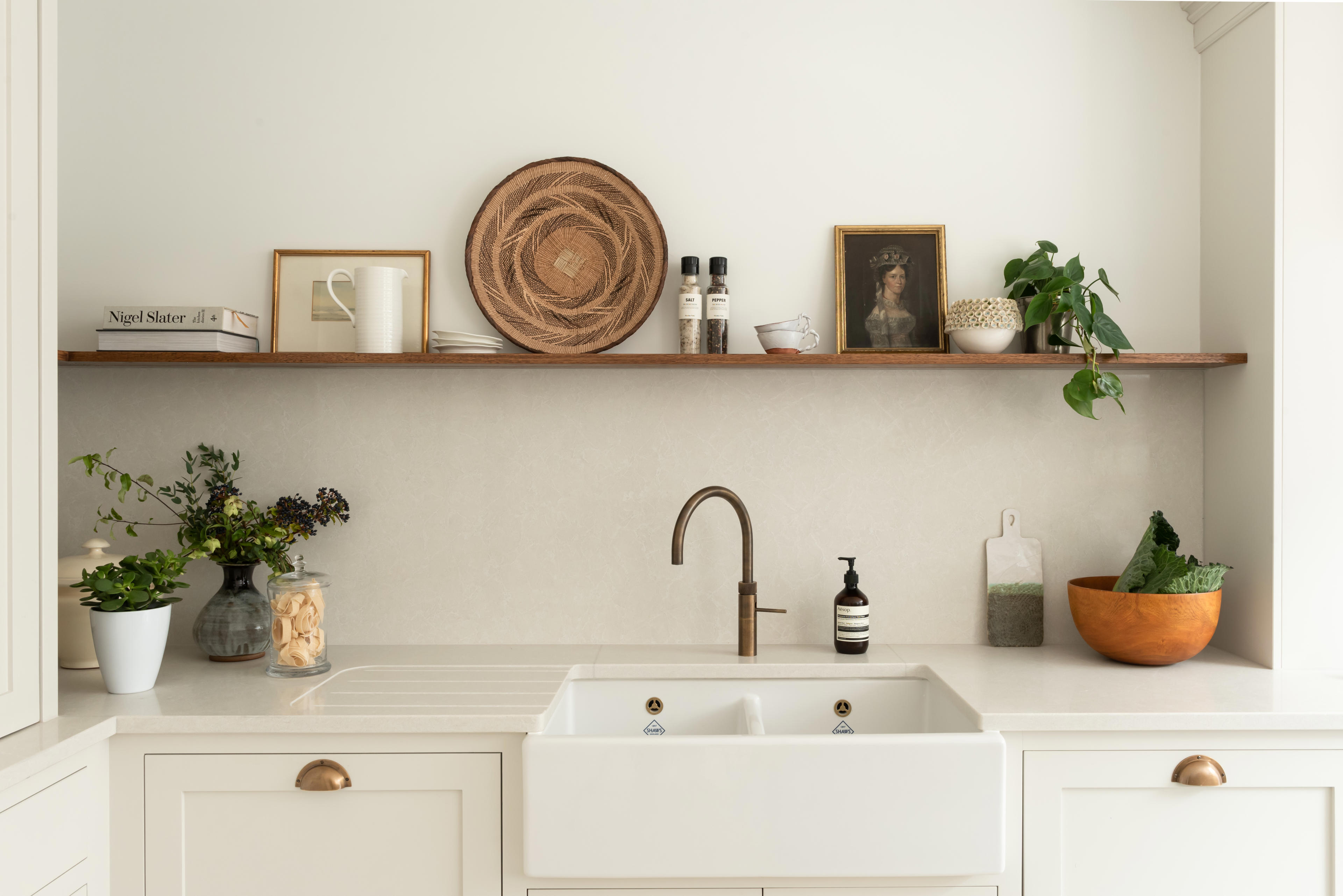
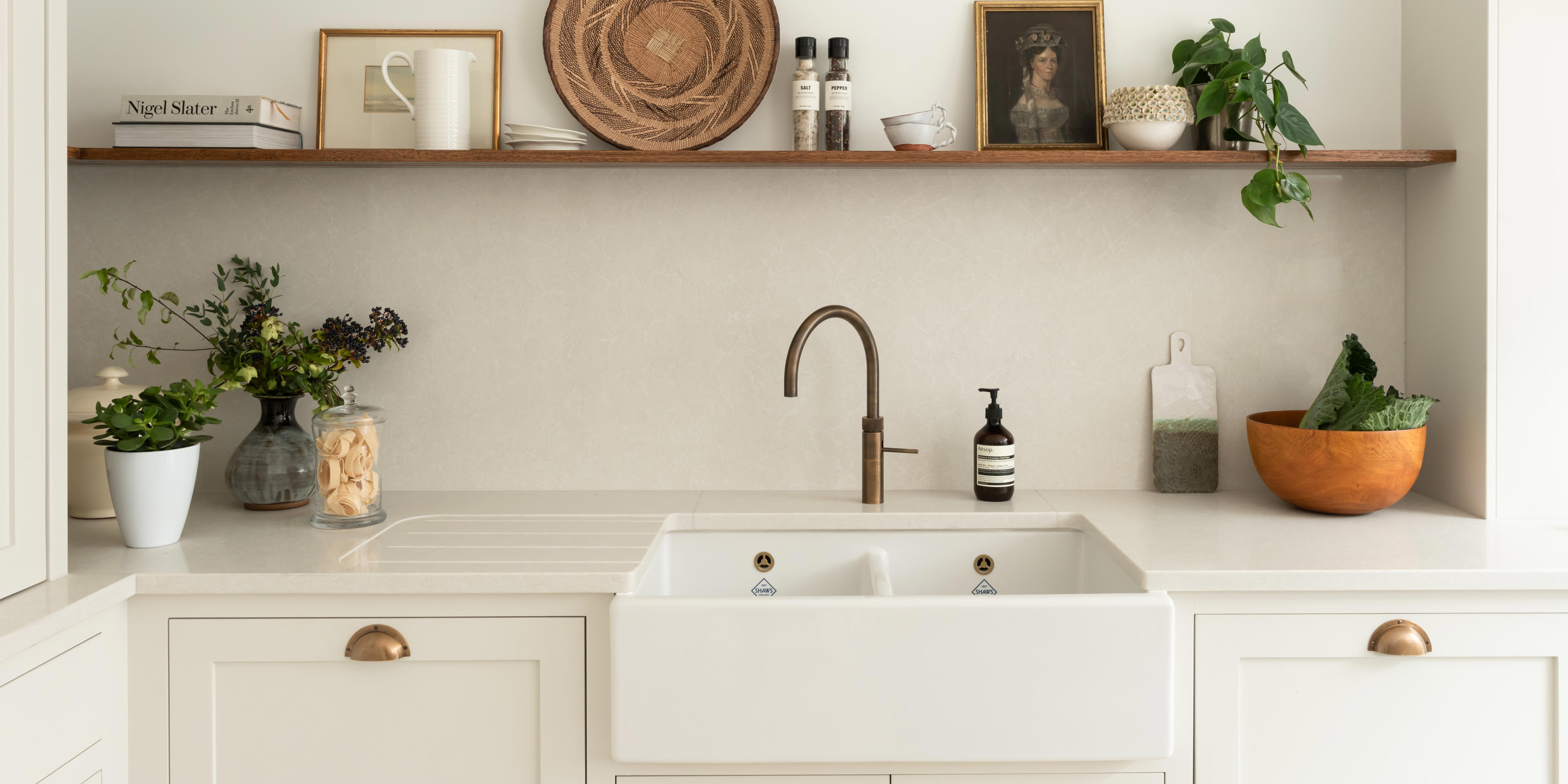
 Shaws Bulter Sink as seen in a Shere Kitchens’ design. Photography by Julia Currie
The origin of the term ‘Belfast sink’ remains uncertain but most people now regard a Butler sink as a Belfast sink with a wide overflow built-in to the side wall. It’s said that Belfast sinks were made to meet the Belfast council regulations, reflecting the abundance of water in the city and the possibility of plumbing systems becoming overwhelmed and flooding homes. There is no real evidence for this, but it’s a good story!
Considerations Before Buying a Sink
If you’re shopping for a new sink, whether it’s to upgrade what you currently have or choosing a design for a renovation, there are certain elements to weigh up before you buy.
Sink Material:
Stainless steel - affordable and hardwearing but shows up scratches easily. It’s also rust and corrosion resistant, easy to clean and lightweight but can be noisy with water spots showing after time.
Composite or quartz - offers the look of natural stone as well as being heat, stain and scratch resistant. A heavy material that can chip easily if something is dropped on top.
Copper - works well in period homes and has antimicrobial properties as well as a unique patina that develops over time but it’s also high maintenance and shows up finger marks easily.
Fireclay or ceramic - with its timeless look and smooth finish, fireclay is naturally anti-bacterial making it an ideal choice for kitchens. Heat, odour, impact, chemical, and dirt and stain resistant, these sinks are built for endurance and easy to maintain.
Size of Sink:
Think about what you want to use your sink for and whether you need a single or double bowl design.
Shaws of Darwen single bowl 600 and 800 wide sinks are ideal for small/ medium kitchens or where washing-up is the main task. For a statement single bowl, the 1000 wide model will accommodate large roasting pans, baking trays and cooking pots.
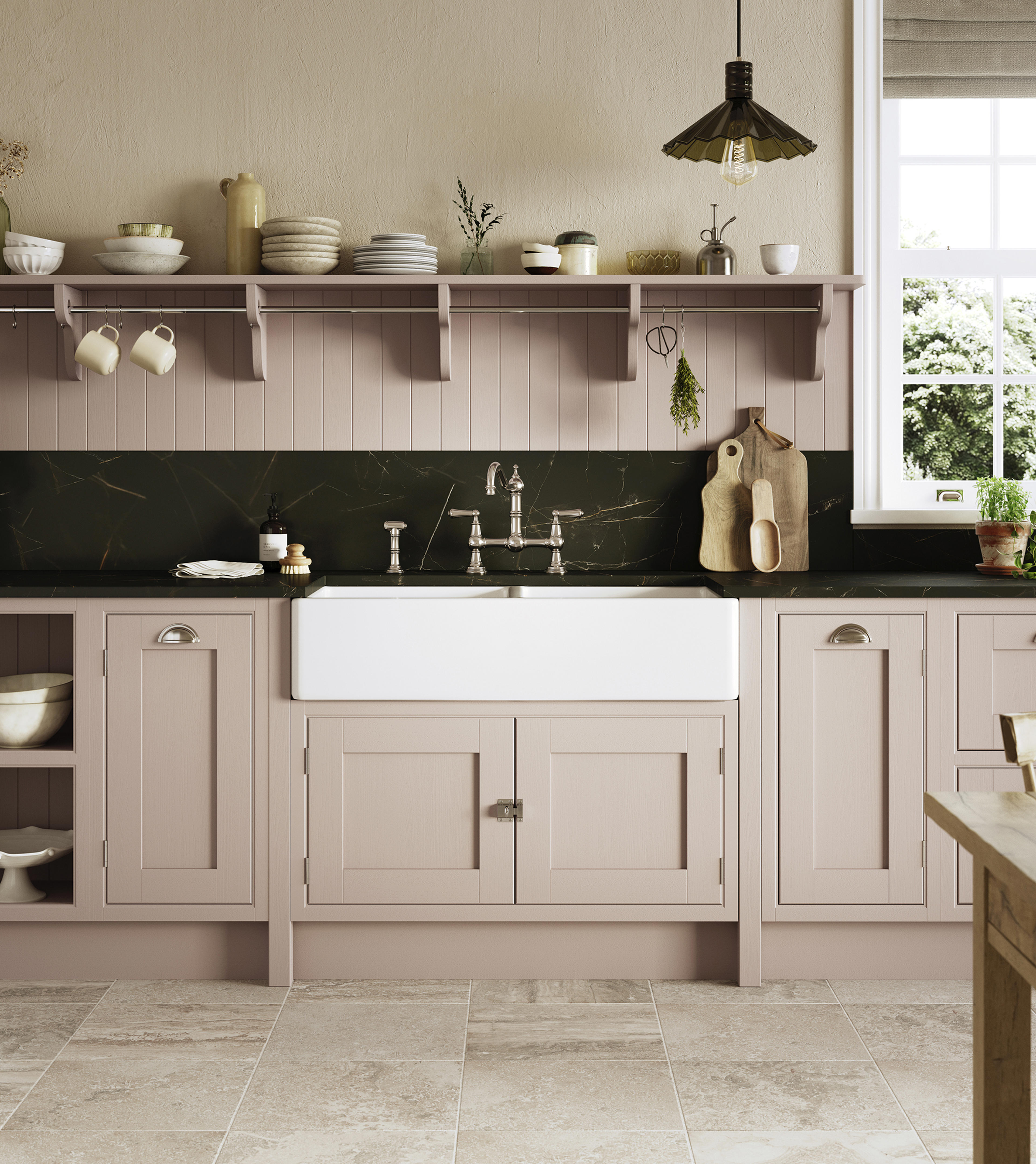
A double bowl on the other hand provides more flexibility, allowing each bowl to be used for different tasks - washing dishes, food prep or as a general cleaning bowl.
Available in 800, 900 and 1000 wide sizes. A 50:50 split sink with two equal sized bowls makes multitasking easy and is perfect for washing and rinsing at the same time. One bowl can also be used for draining dishes and glasses, helping to keep worktops clutter free.
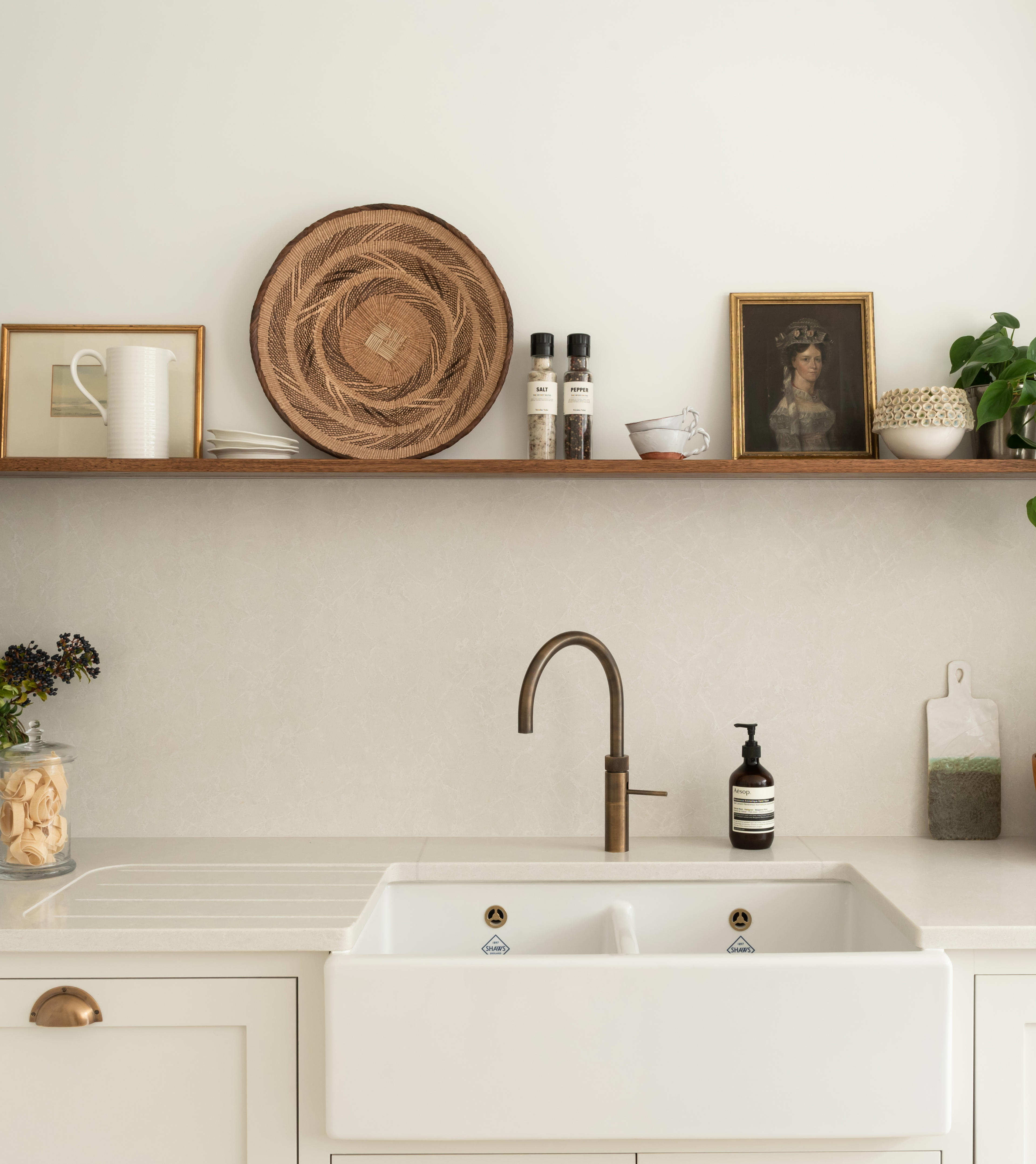 Shaws Double Bowl Sink as seen in a Shere Kitchens’ design. Photography by Julia Currie
A 70:30 split sink has one large bowl and one small bowl, ideal for keeping prep and clean-ups separate. The low divider also makes it easy to fit large pans while still enjoying the benefits of a dual bowl set-up.
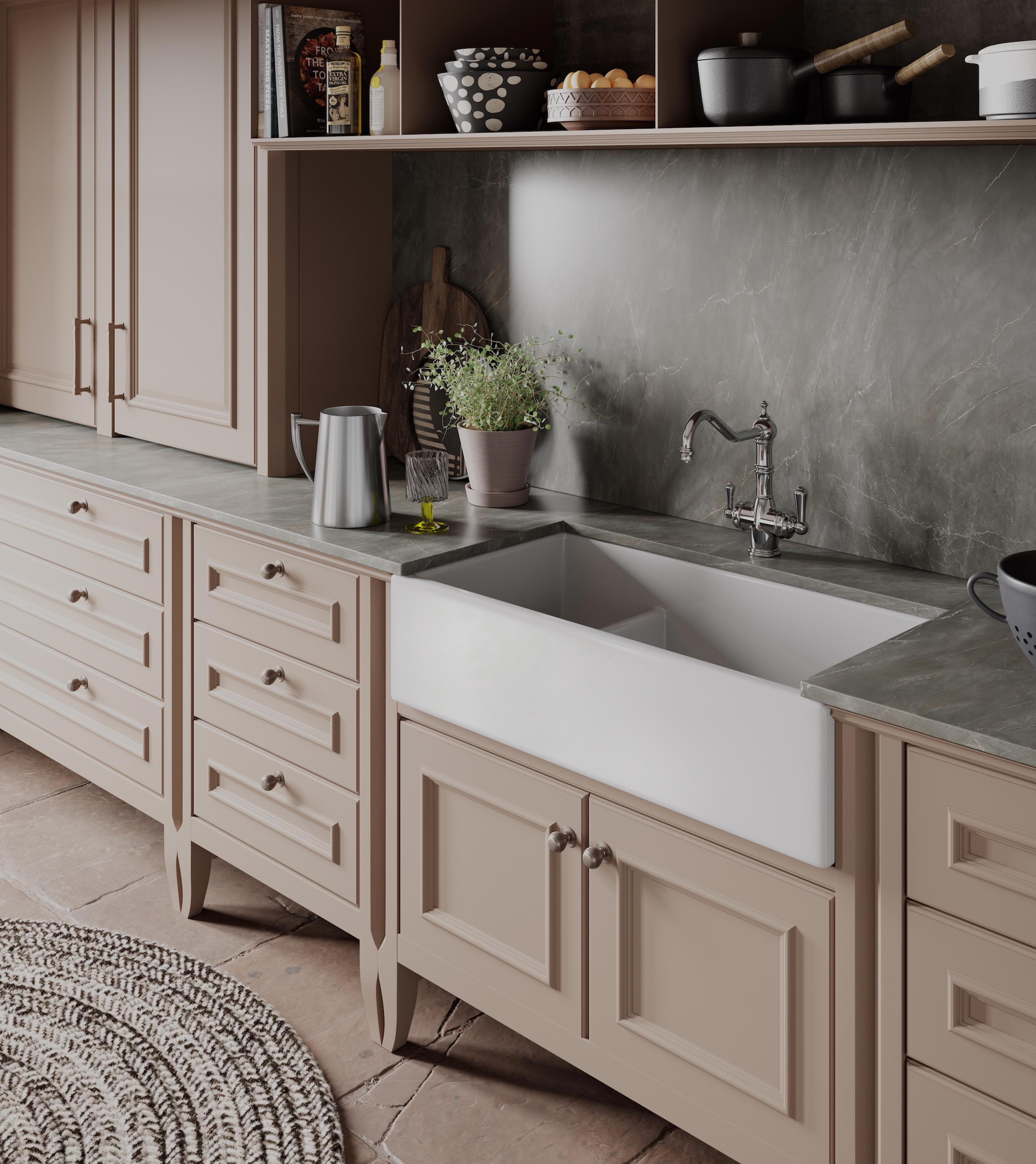
Style of Sink:
Undermounted sinks fit beneath the counter, offering a sleek look, easier cleaning and pair best with granite or quartz worktops.
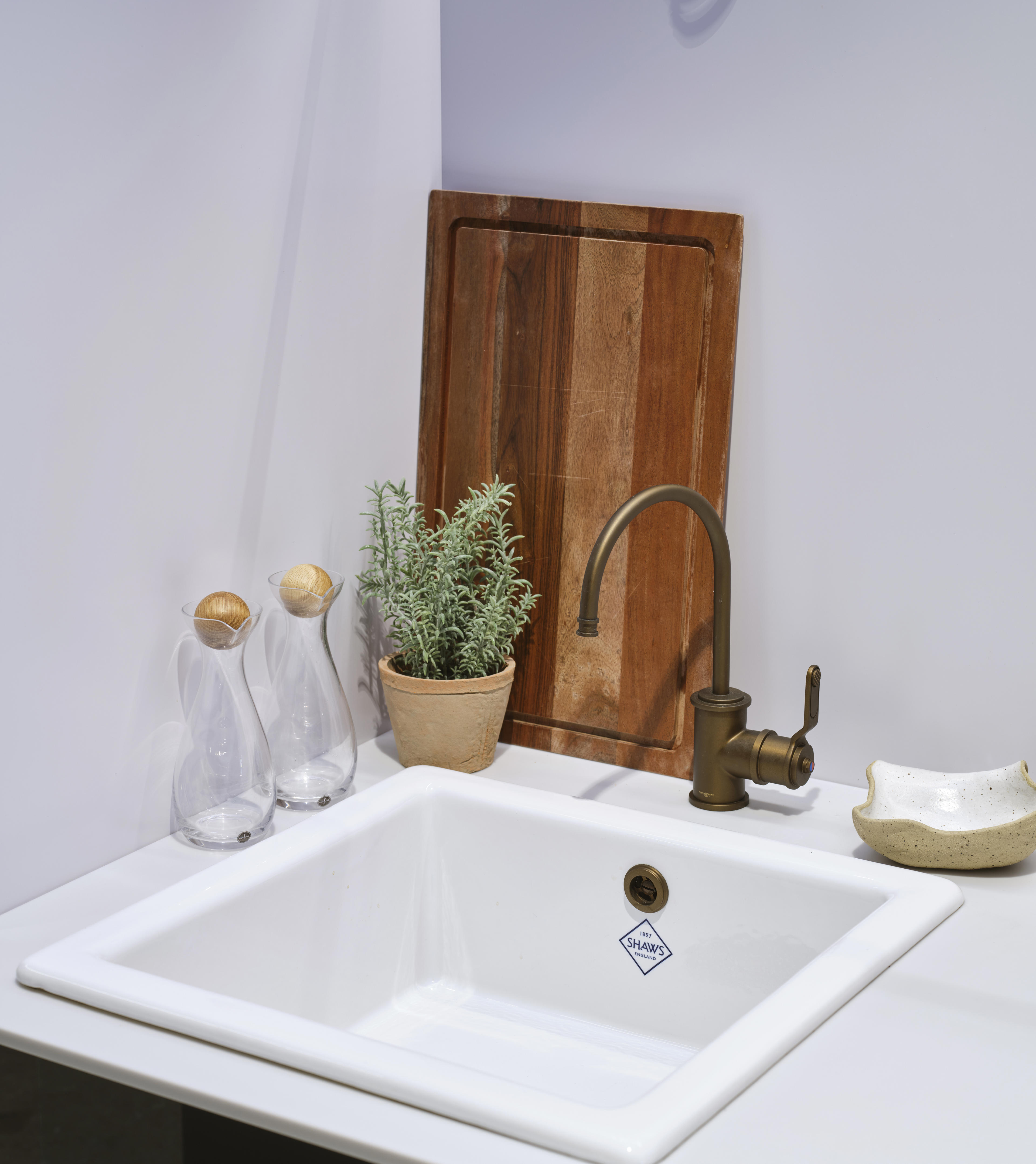
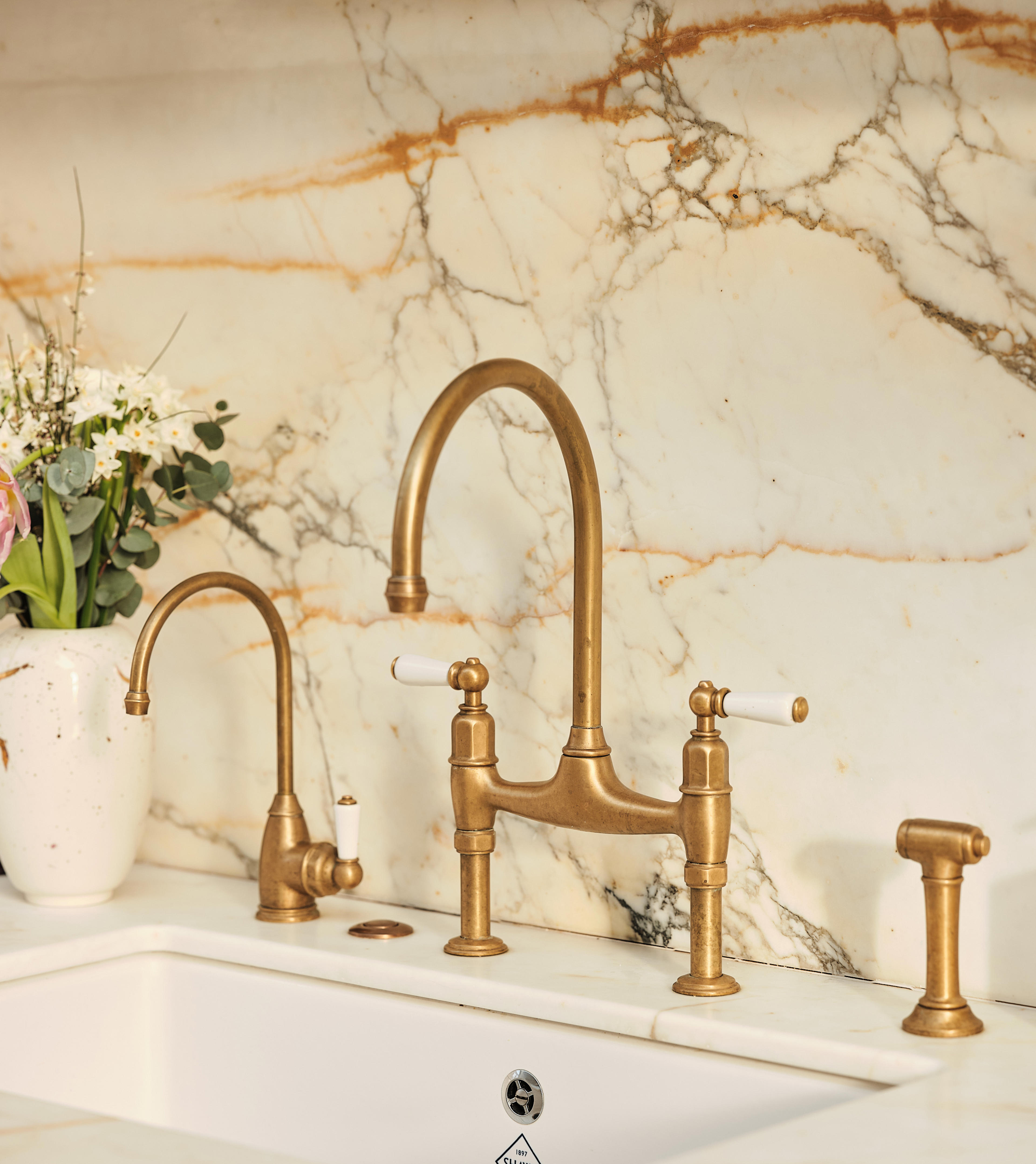 Shaws Inset 800 Sink. Design Laura Butler-Madden. Photography Patrick Butler-Madden
Inset sinks sit on top of the counter with a visible rim. They are easy to install and fit on most surfaces.
Apron fronted farmhouse sinks feature a bold and exposed front, perfect for classic and transitional style kitchens.
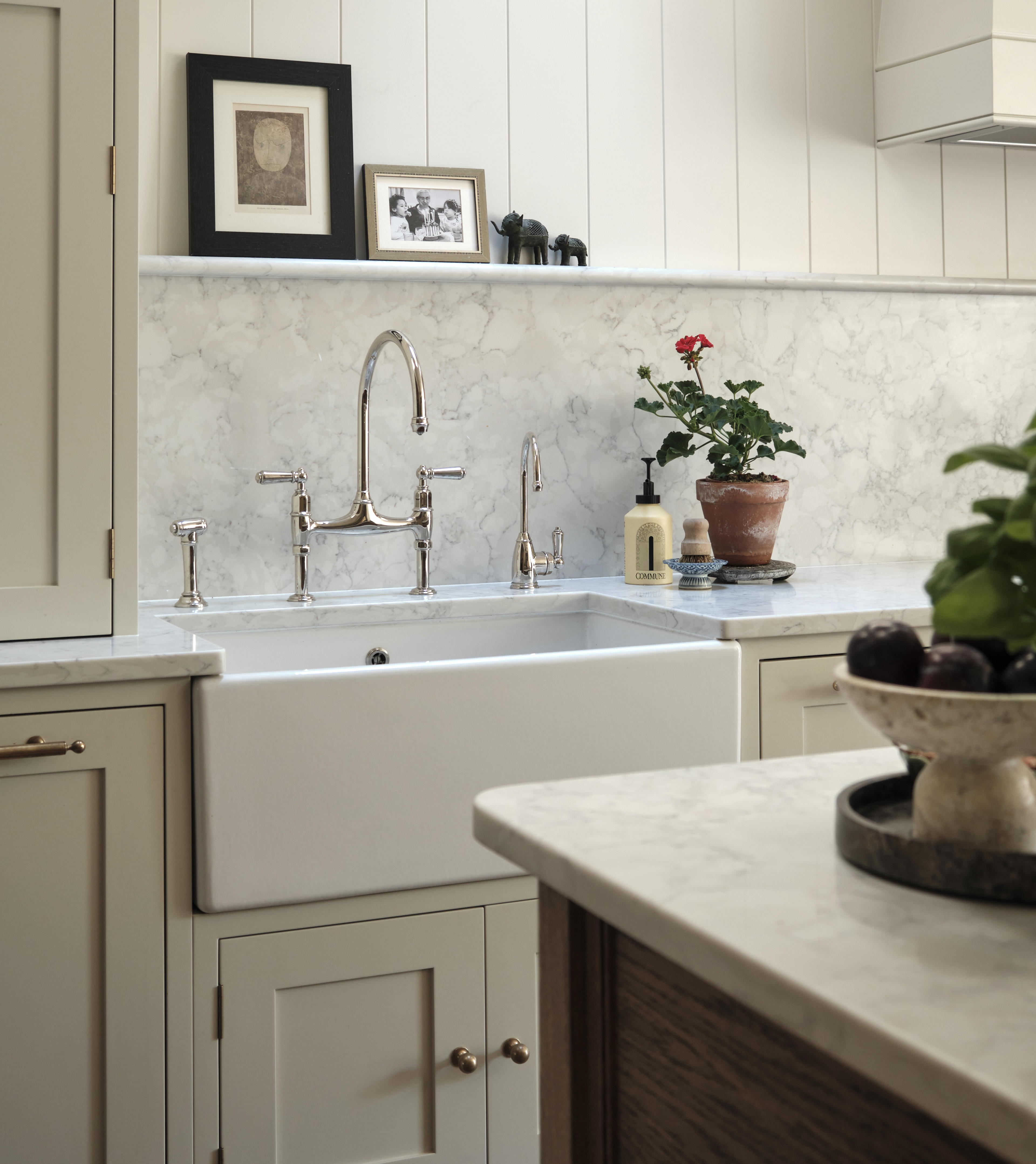 Shaws Shaker Sink with Perrin Ionian Mixer with Rinse and Mini Instant Hot Tap all in Nickel. Photography Sarah Griggs
 Fluted designs which add interest and texture are becoming increasingly popular – the Shaws of Darwen Ribchester and Bowland fluted kitchen sinks are proudly shared on social media by designers and homeowners.
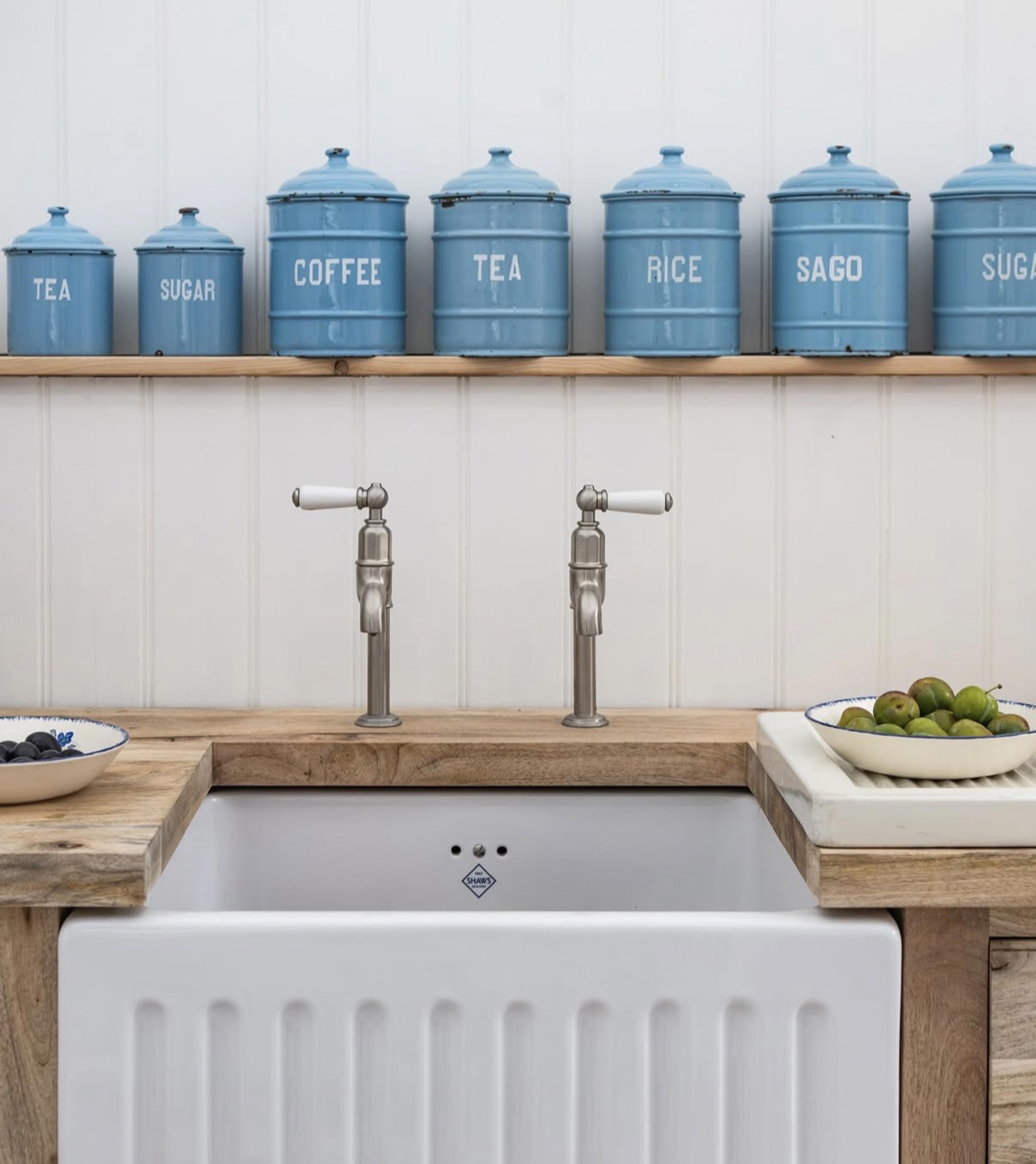 Shaws Bowland Sink. Photography Belle Daughtry
Take Worktop Material into Consideration
When selecting a kitchen sink, it’s important to take the worktop material into consideration, as some surface materials aren’t compatible with all sinks. The great thing about Shaws of Darwen sinks is that they are designed to be extremely versatile and can be used with a variety of solid worktop materials such as granite, marble, quartz or wood.
What about a Second Sink?
Increasingly we see designers separating the ‘cleaning sink’ often paired with a mixer tap with built-in or side rinse from the ‘drinking / food prep sink’ typically situated in an island unit with an instant hot water tap. This set up does need forward planning.
An island sink will require plumbing and if you’re fitting a traditional fireclay Butler sink, it’s best to order this before the worktop is cut, as the dimensions can vary +/- 2% on these handmade pieces.
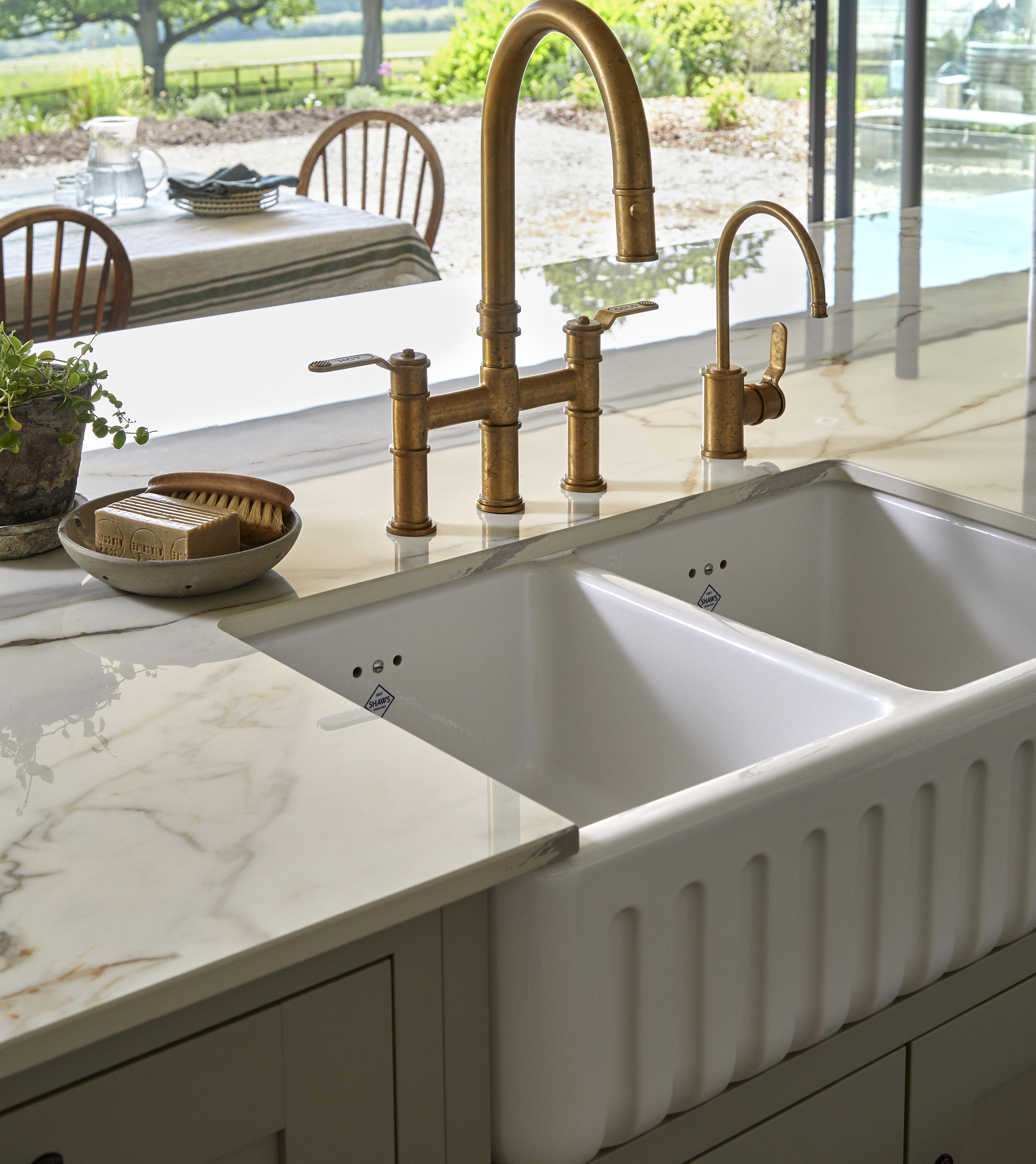 Shaws Ribchester Sink. Photography Sarah Griggs
Why Choose a Shaws of Darwen Fireclay Sink
For over a century, Shaws of Darwen fireclay sinks have been made using traditional techniques such as slip casting, glazing and hand finishing that have been passed down from artisan to artisan since the company was established. Taking two to three weeks to make, every Shaws of Darwen sink comes with a certificate of authenticity and a 25 year warranty.
Each Shaws of Darwen sink is moulded from a unique blend of finest French clay and English Devon Ball clay – the exact formula is a closely-guarded secret. Made using a slip casting process, the blend of clay with water is poured by hand into a porous mould, which Shaws make themselves.
When the newly formed wash basin is dry enough to be handled, it is removed from the mould and skilled artisans then trim and finish the shape of each sink by hand - it takes five years to master this art.
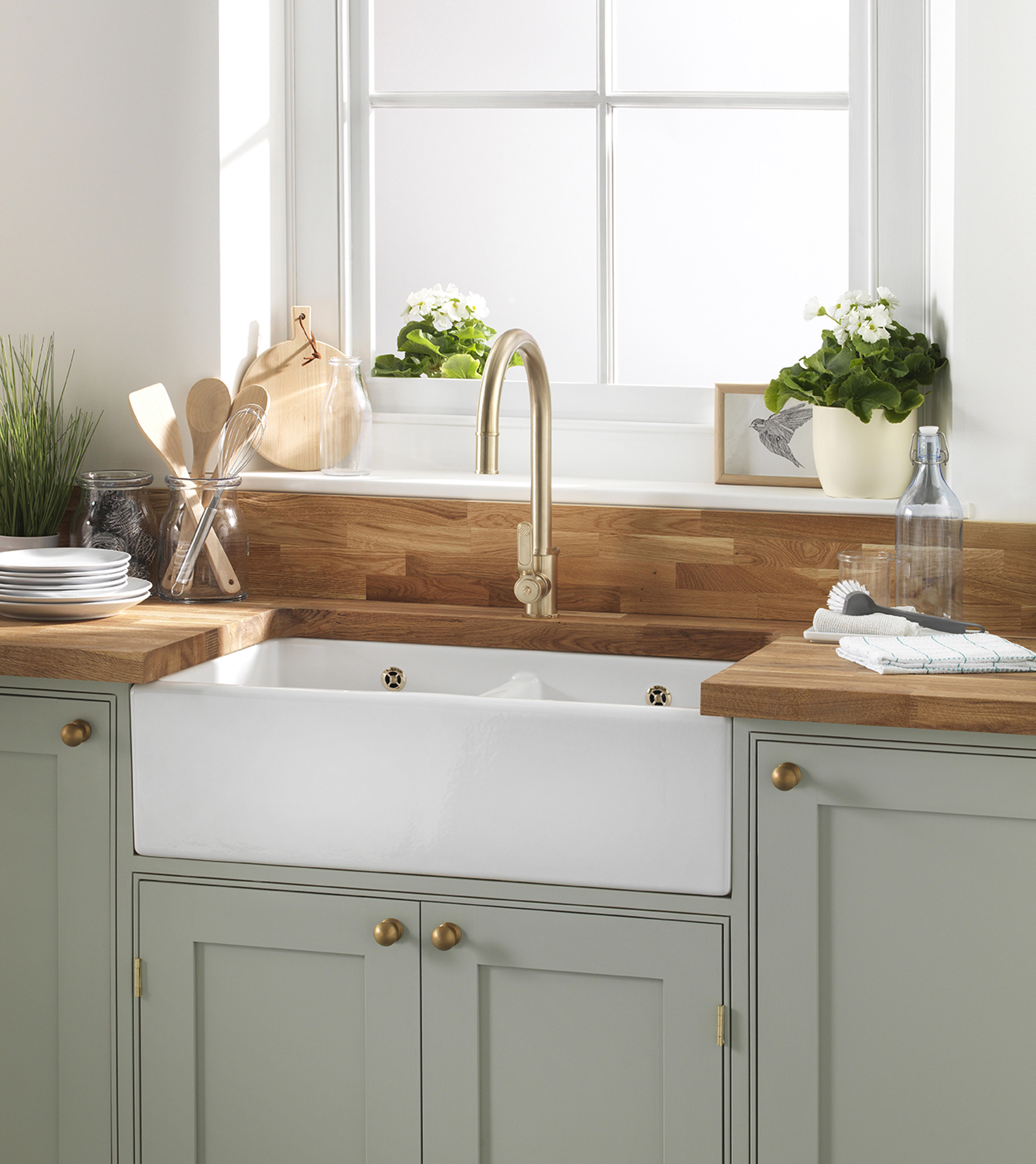 Shaws Shaker Double 800 Sink
The sink must then dry slowly for up to 40 hours before being glazed twice and fired in specially designed kilns at temperatures of up to 1˚C. This creates an impermeable surface that is resistant to heat, impact, chemicals and stains – ideal for the tough conditions of a domestic kitchen.
Select the Perfect Sink Style for Your Space
Shaws of Darwen has a wide choice of apron-fronted double bowl sinks (great for multitasking, washing-up, food prep and cleaning) and apron-fronted single bowl designs for smaller kitchens or washing-up. There is also the option of inset and undermount designs, both compatible with any solid worktop such as granite, marble, quartz or solid wood.
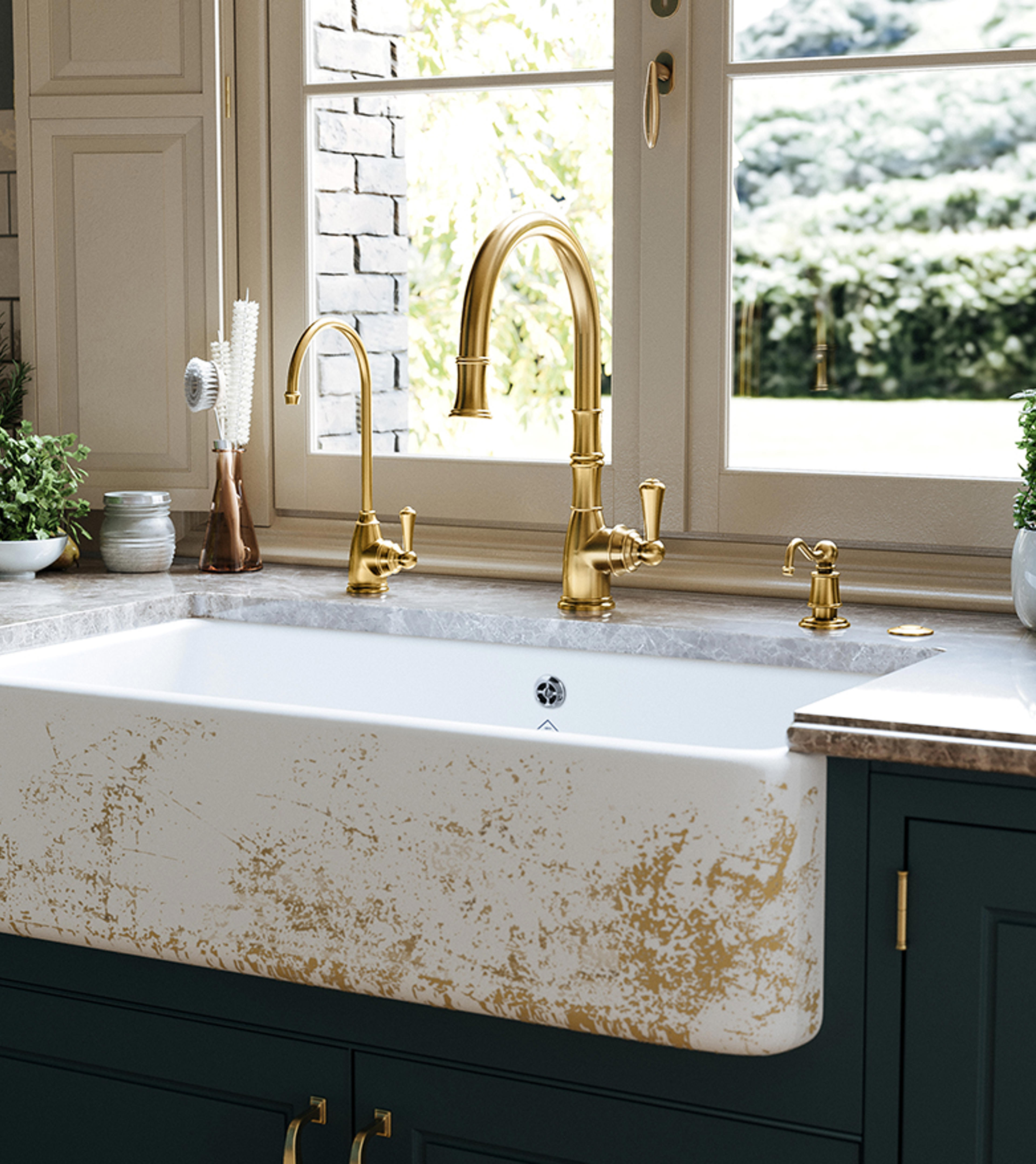
Embellishing its most popular sinks with exclusively designed artwork, the striking Shaws of Darwen Gallery collection is available on five sinks in three of its most popular styles - Butler 600, Butler 800, Shaker Double 900, Shaker Single 800 and Double Bowl 800.
There are seven designs to choose from with illustrative and abstract forms to complement classic and contemporary kitchen decors.
How to Look After Your Fireclay Sink
Once you purchase a fireclay sink, you’ll want it to look and perform just like new for longer, so clean it every day with a non-abrasive cleaning product using a soft sponge or cloth. A simple soap and water solution should do. Never place hot pots, pans or baking trays into the sink straight after cooking and use a Sink Grid or rubber mat to protect the bowl base. Wipe the sink dry after every use where possible and avoid standing water.
Choosing Your Brassware
Now you’ve selected your perfect sink, it’s time to think about the tap. Perrin & Rowe and Shaws of Darwen (both part of House of Rohl) share a belief in British design and craftsmanship and are often specified together. Shunning mass production,
Perrin & Rowe’s brassware is created in small batches at its own factories in Britain to ensure a flawless finish, reliable performance and longevity.
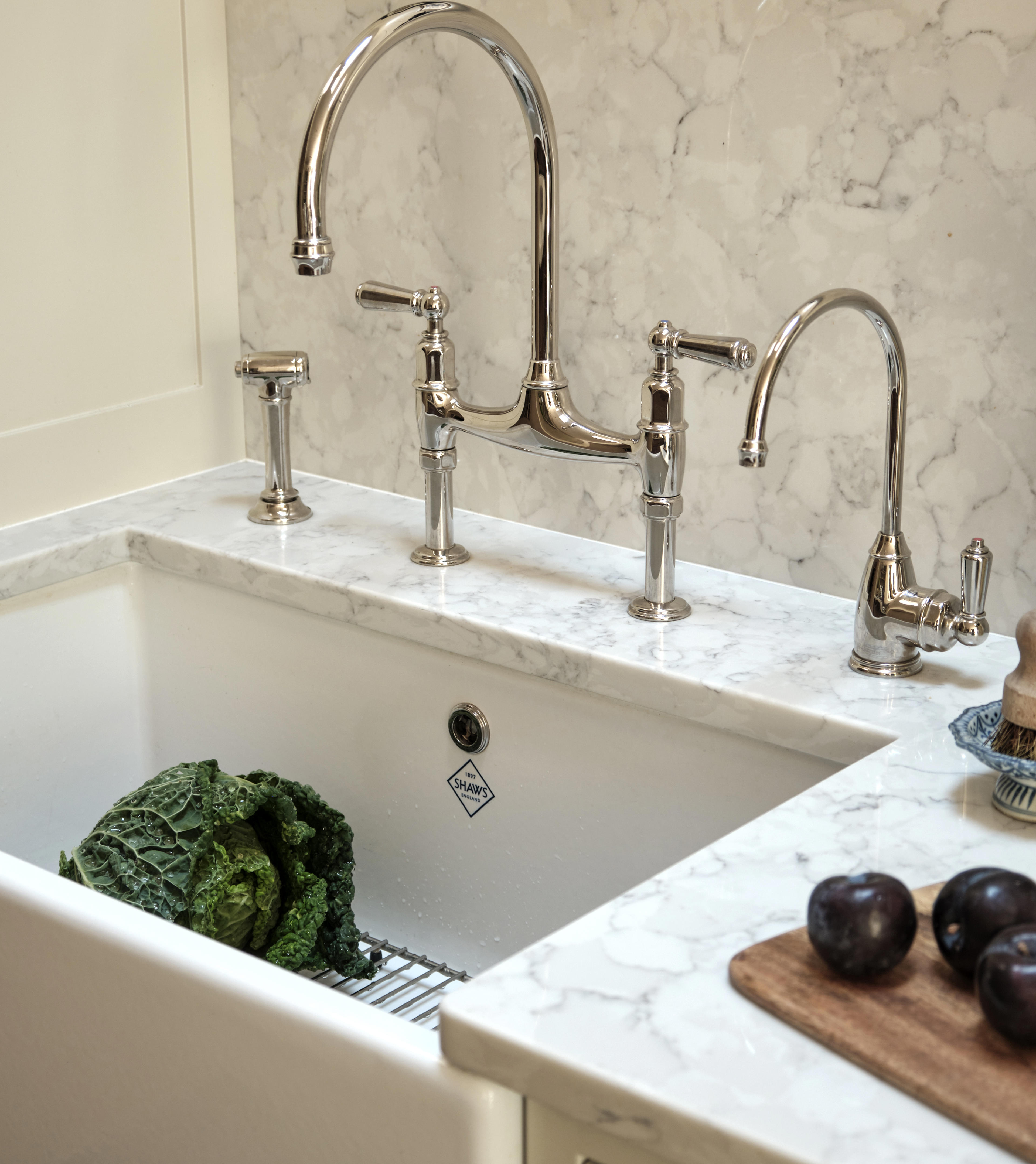 Shaws Shaker Sink with Perrin & Rowe’s Ionian Mixer with Rinse, and Mini Instant Hot Tap all in Nickel. Photography Sarah Griggs
 All Perrin & Rowe brassware is made with the highest quality brass, poured by hand at 1000° Celsius into moulds. After machining and soldering by hand, specialist polishers develop the deep, lustrous finish.
Polishing may sound simple, but it requires exceptional skill - a large tap can take up to an hour. Perrin & Rowe's team of polishers have a minimum of 10 years’ experience and have learnt how to achieve the best finish on hundreds of different products. Every single tap is pressure-tested with water before it receives a final polish and is boxed for despatch.
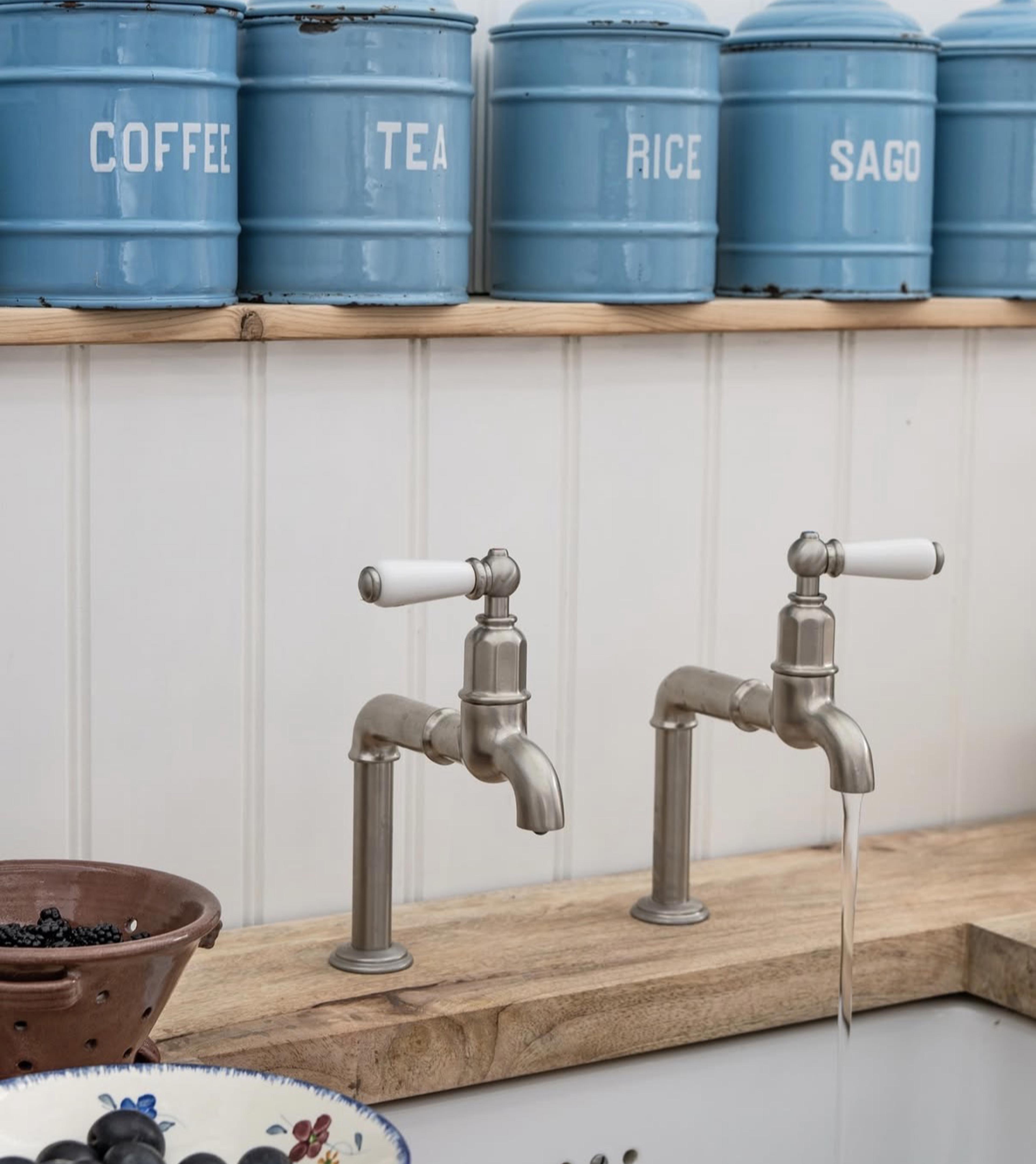 Shaws Bowland Sink with Perrin & Rowe’s Ionian Bibcock Taps in Pewter. Photography Belle Daughtry
Perrin & Rowe offers eight ranges and eight finishes across its kitchen collections – chrome, nickel, pewter, English bronze and 24 carat plated gold along with unlacquered satin, polished and aged brass, which will develop a unique patina over time.
Shaws Inset 800 Sink with Perrin & Rowe's Aged Brass Ionian mixer with Rinse, and Ionian Mini Instant Hot Tap. Design Laura Butler-Madden. Photography Patrick Butler-MaddenFor a cohesive design, ensure you match the sink basket strainer to the tap finish. Not all manufacturers offer this, but Perrin & Rowe stock basket strainers in all eight of its finishes.
How to Organise Your Kitchen Sink
There’s no need for single-use plastic soap dispensers once you add a Deck-Mounted Soap Dispenser from Perrin & Rowe to your new sink set-up.
To complete your new sink space, don’t forget to tackle that under-sink storage, too. Take all the cleaning products out and recycle or throw empty containers. Invest in some waterproof open baskets or storage caddies to group similar items together. This not only makes it easier to find what you need but it also makes cleaning less of a chore.
Inspired by the way you live
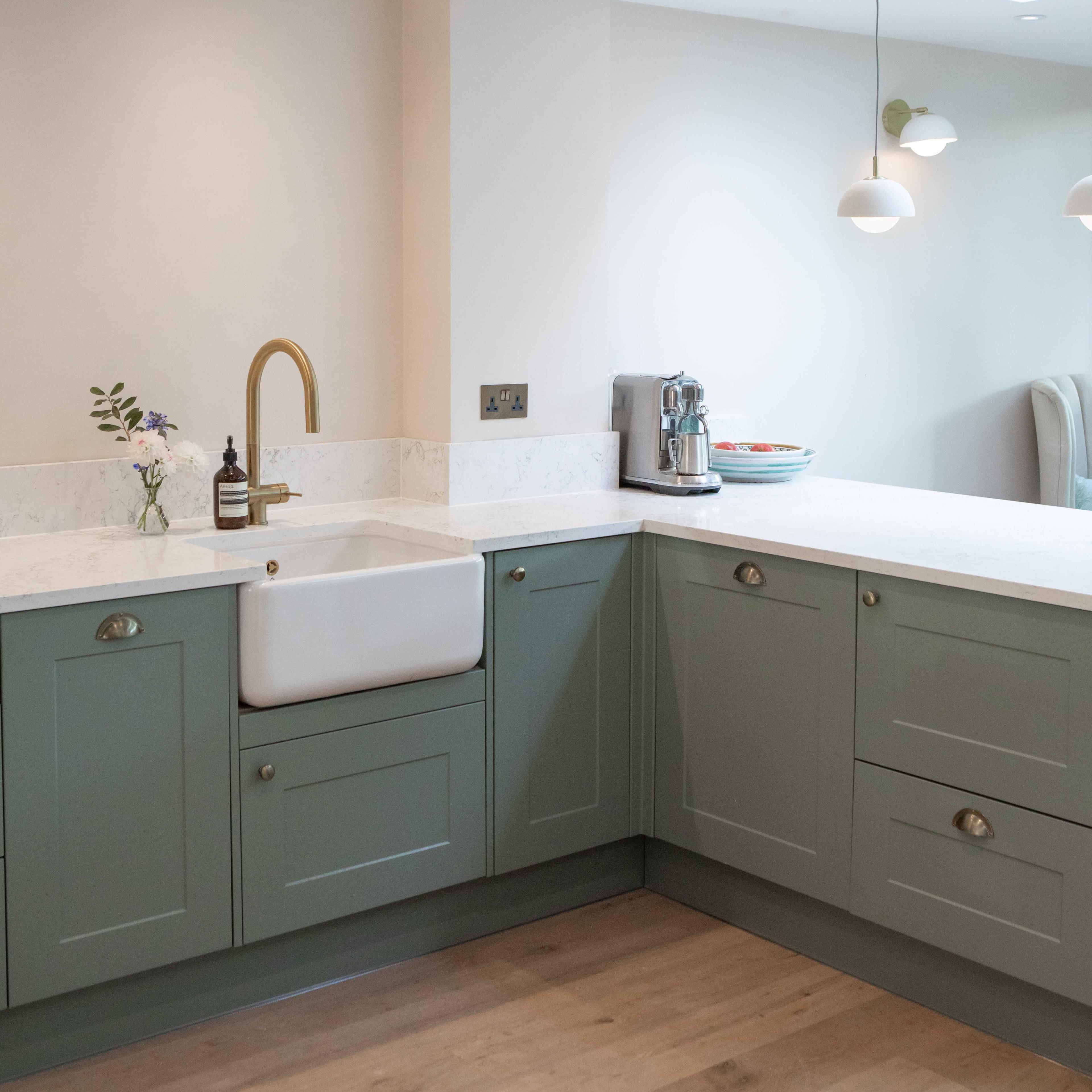
@rosannafalconer
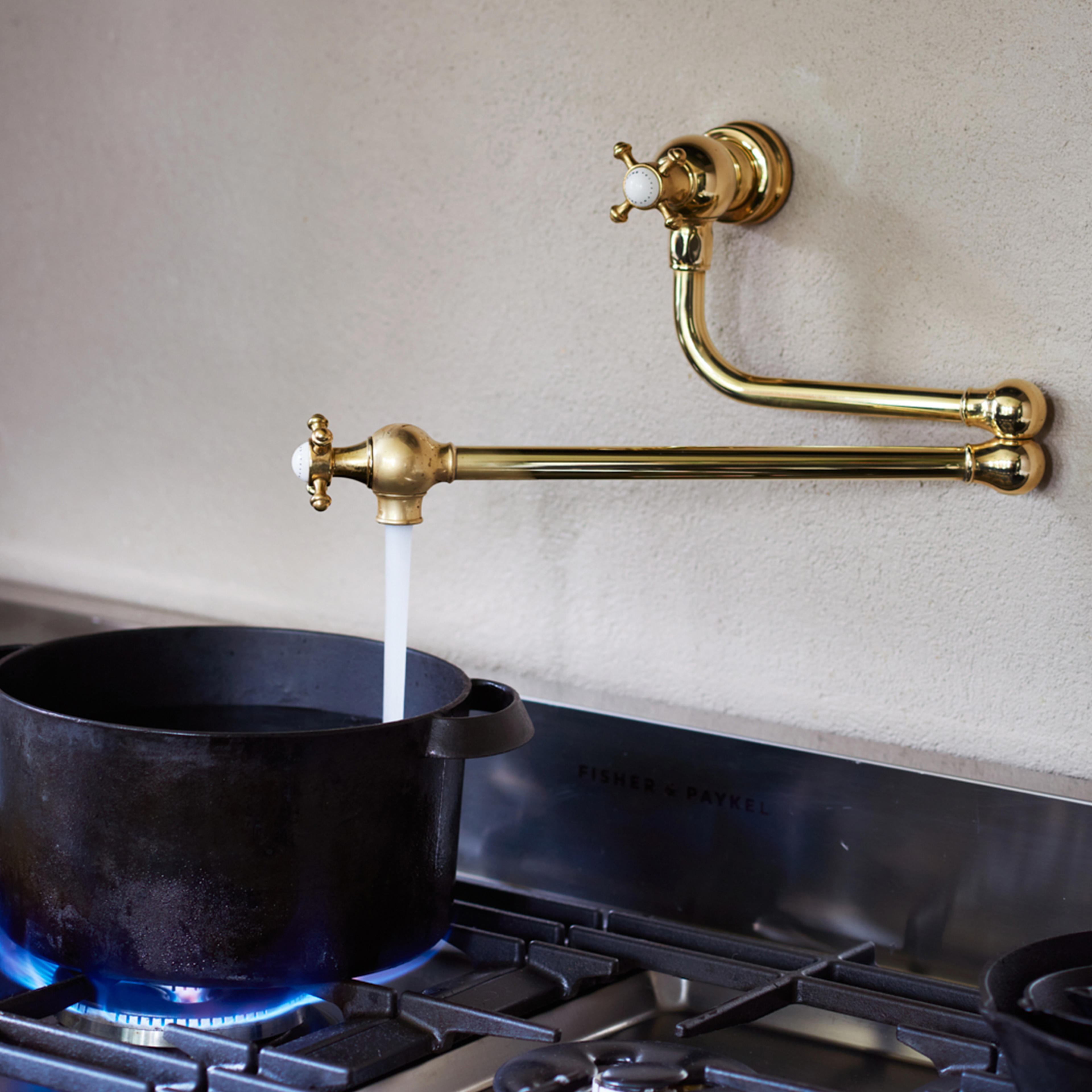
@halfpenny_at_home
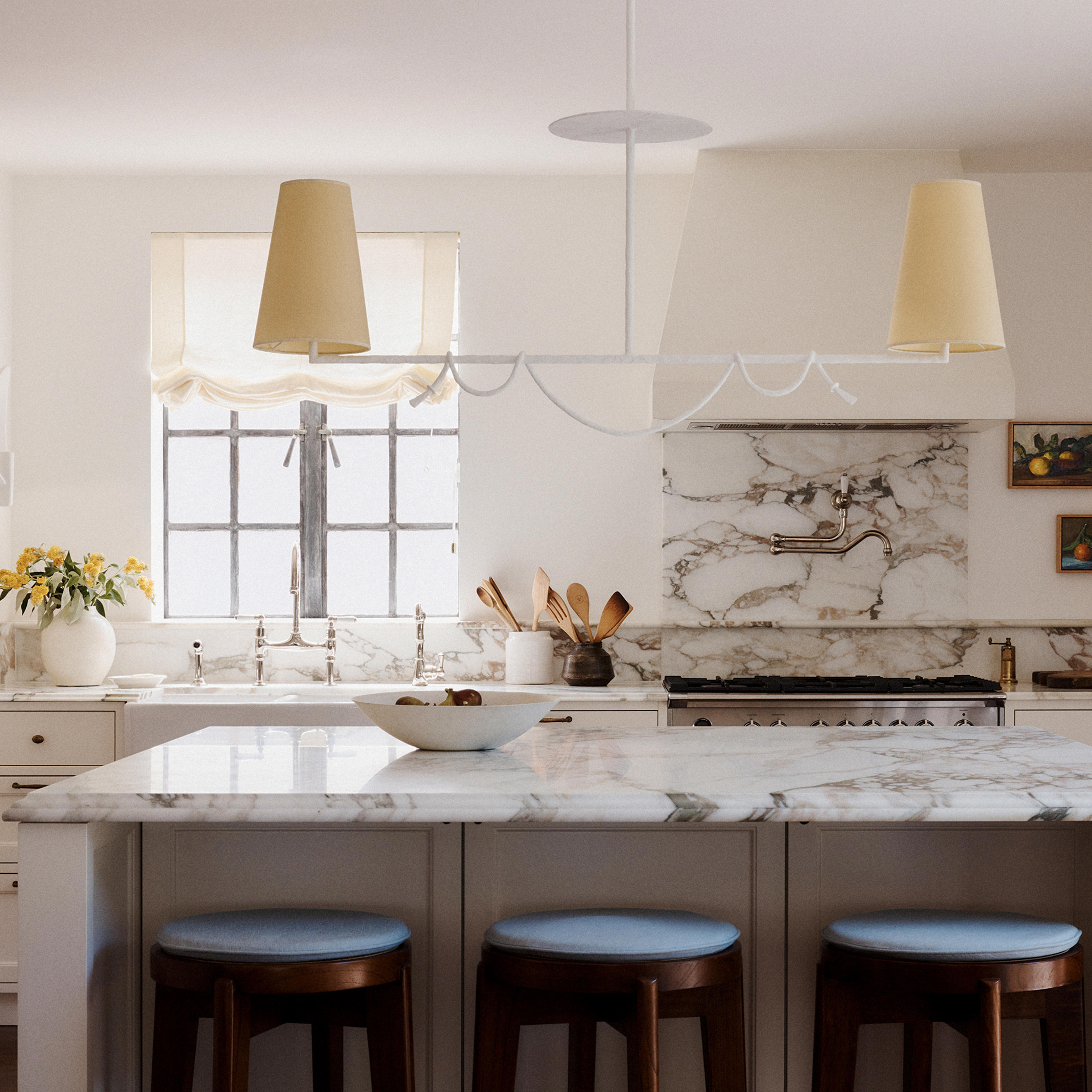
@phoebenicol.interiors
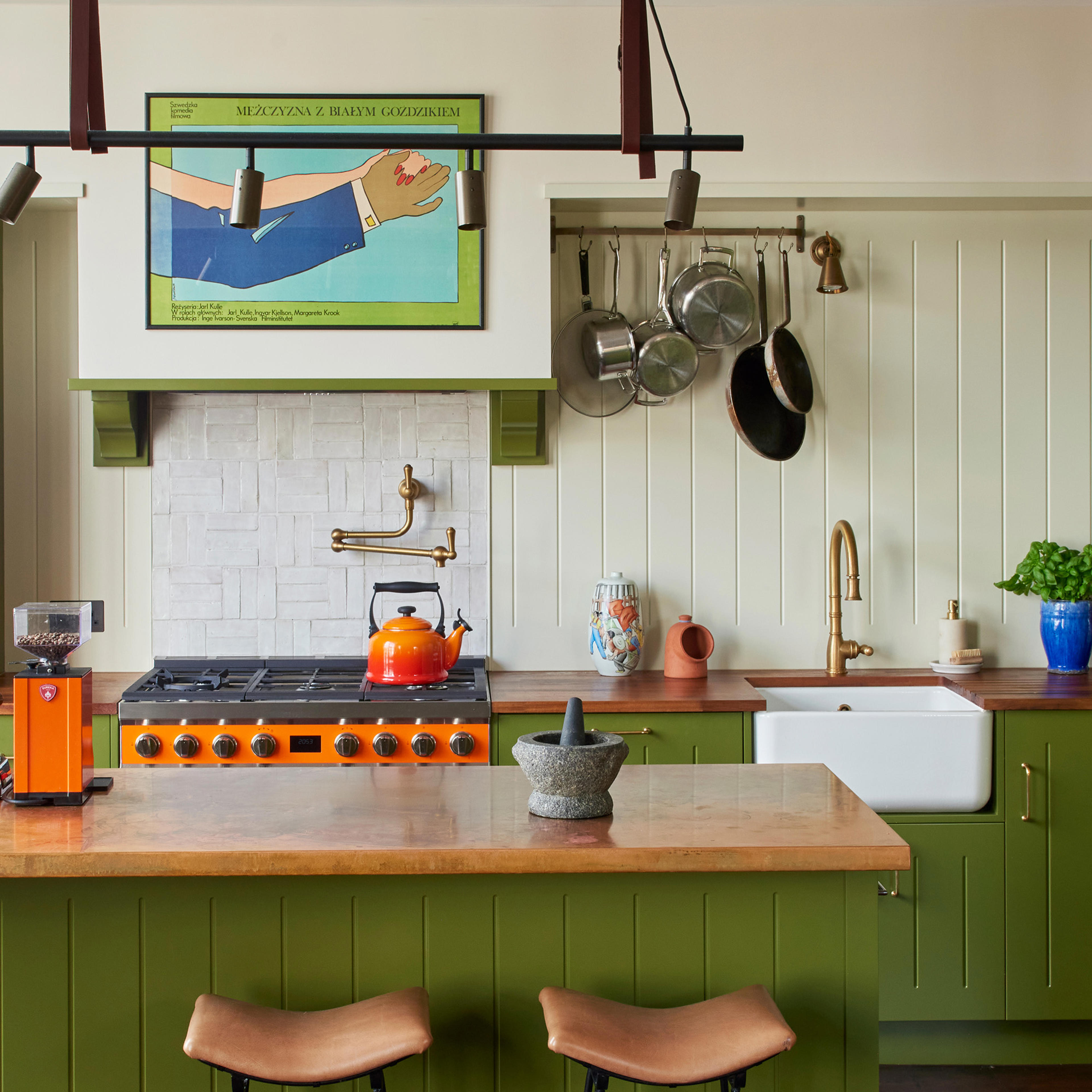
@howarkdesign